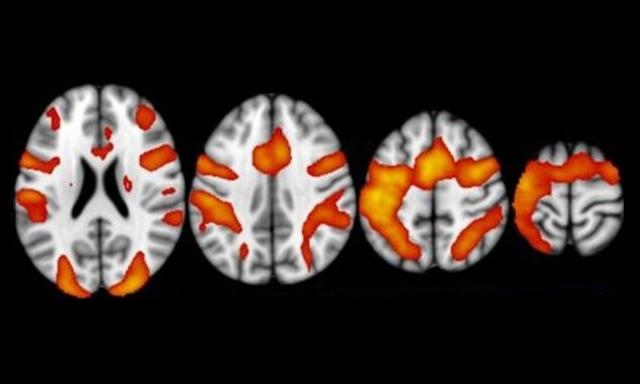
A recent study published in Scientific Reports by researchers at The Ohio State University shows how physical fitness influences brain function as we age, offering new insight into how lifestyle choices may help preserve cognitive and motor abilities later in life.
As we age, the brain tends to become less specialized, with tasks that once engaged one side of the brain beginning to involve both hemispheres. The meaning of this shift, known as reduced hemispheric asymmetry, is still debated. It may reflect the brain compensating by recruiting additional resources to maintain function, or it may indicate reduced efficiency in brain activity. Understanding what drives these changes is important for developing strategies to support brain health with age.
To explore this, Dr. Hayes’ team examined how cardiorespiratory fitness relates to brain activity and motor function across adulthood. Study participants, ranging in age from 35 to 86, completed a VO₂ peak test to measure fitness, underwent brain MRI scans while performing simple motor tasks, and completed a more complex coordination task known as the Grooved Pegboard test.
The researchers found that higher fitness in middle-aged adults (35–64 years) was associated with more “youth-like” brain activity, where one hemisphere is more active during movement. In older adults (65 and older), fitness was no longer linked to this pattern. However, across all ages, individuals with higher fitness performed better on tests of motor coordination.
Interestingly, older adults who showed more balanced activity across both sides of the brain performed better on motor tasks. This suggests that, later in life, using both hemispheres of the brain may actually help support movement and coordination.
These findings highlight that the relationship between fitness and brain function changes with age, suggesting there is no single pattern of “healthy” brain activity. Instead, the brain may adapt in different ways across the lifespan, and maintaining physical fitness could play an important role in supporting these changes.